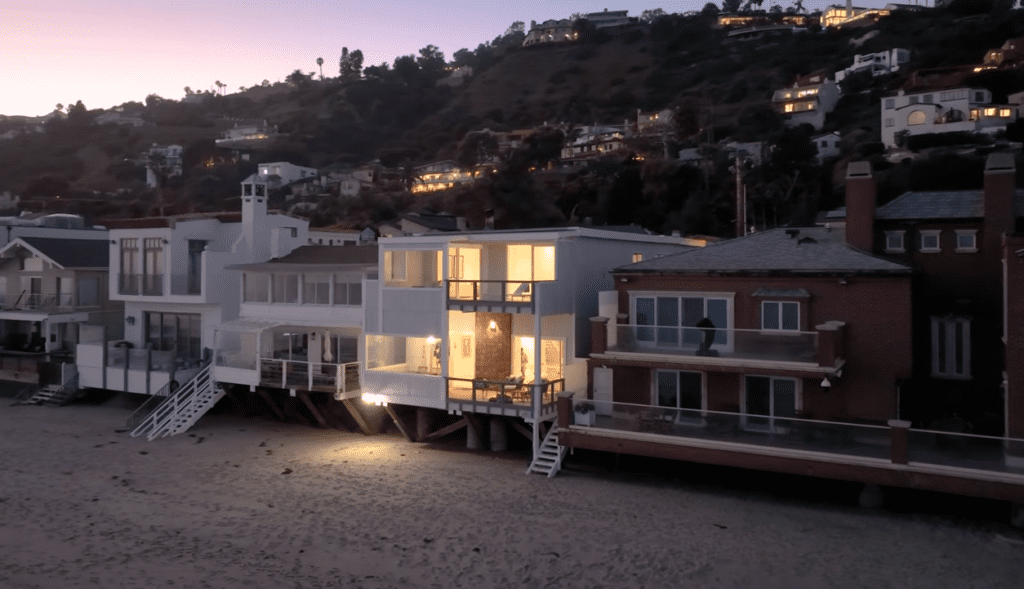
Lloyd and Dorothy Bridges, renowned actors of the 1950s, purchased a beachfront property along the Pacific Coast Highway, a decision that would carry significant implications for their family. Following their passing, the estate transitioned to their children, and as property values soared, the dynamics of inheritance and taxation became a focal point. This article delves into the Bridges family’s property and the complexities surrounding California’s unique tax laws that often favor long-term owners.
The Bridges Family Home: A Legacy Transformed
In the late 1950s, Lloyd and Dorothy Bridges acquired a beachfront home in Malibu, although the exact price remains unclear. Comparatively, properties in the area sold for between $40,000 and $50,000. Assuming they paid $50,000, this would equate to about $550,000 today. Lloyd passed away in 1998 and Dorothy in 2009.
Upon Dorothy’s death, the property was inherited by their three children: acclaimed actors Jeff Bridges, Beau Bridges, and their sister Lucinda. By the time the siblings took ownership, the home’s value had appreciated into the millions.
Inheriting property can complicate family dynamics, particularly when it comes to equitable use. Who claims the home during holidays? How do grandchildren access it? Given their successful careers, Jeff and Beau’s financial stability suggests they were less concerned about the property’s monetary value. While Lucinda’s financial situation is less known, the simplest solution often seen in such circumstances is to convert the estate into a rental property.
The Bridges siblings opted for this route, renting the home for $16,000 in off-season months and $25,000 during peak summer. This arrangement generated an estimated annual income of $200,000, or roughly $67,000 each, requiring minimal effort on their part.
With no mortgage and limited maintenance needs, the main expense faced by the siblings was property taxes. Remarkably, due to California’s tax regulations, their tax bill was around $5,700 per year. To put this in perspective, their annual tax bill could be offset by as little as 11 days of rental income.
Understanding California Tax Laws
The roots of this favorable tax situation can be traced back to California Proposition 13, which limits property taxes to 1% of the assessed value and restricts annual value increases to 2%, unless ownership changes.
Additionally, California Proposition 58, passed in 1986, allows for the transfer of primary residences from parents to children without tax reassessment. This means heirs can often maintain taxation based on decades-old valuations.
To illustrate, imagine inheriting a property purchased by your grandparents in the 1940s for a mere penny. If this property were valued at $30 million at the time of inheritance, the collective financial burden for the heirs would be substantial. Each would need to contribute around $100,000 annually to cover property taxes, which could lead to significant family disputes.
Critics of these laws express concern over disparities in tax responsibilities among neighboring homeowners, where one family pays substantially less than another based solely on the timing of their purchase. In Los Angeles County, properties like the Bridges home have become symbols of a “two-tiered” tax system.
The backlash against this inequality resulted in reform. In 2020, California voters approved Proposition 19, which tightened inheritance rules, stipulating that heirs must reside in inherited properties to retain specific tax benefits. Rental and secondary homes face reassessment at market value.
Importantly, Proposition 19 is prospective, meaning it doesn’t retroactively impact transfers that occurred under prior rules. The Bridges siblings benefitted from the previous regulations when they inherited the property in 2009.
The Future of the Property
Following years of maintaining a financially advantageous rental property, the Bridges siblings listed the home for $9.2 million in July 2024. After failing to attract buyers, they reduced the asking price to $8.85 million on January 7, 2025. Unfortunately, this same day also marked the outbreak of the Palisades Fire, which ultimately destroyed the home.
Just over a year later, the cleared lot was placed back on the market for $4.37 million.
The Financial Reality for Potential Buyers
For a prospective buyer considering the cleared lot, a purchase price of approximately $4 million might seem appealing. However, constructing a new home in Malibu could easily cost around $2,000 per square foot, with a 3,000-square-foot house potentially reaching totals of around $6 million.
This means the total investment could approach $10 million. As this would be new construction, the finished home would be reassessed at current market value. For a home priced conservatively at $10 million, the annual property tax would be in the vicinity of $100,000, sharply contrasting with the significantly lower taxes enjoyed by the Bridges siblings.
For those in the position to invest in such a property, the $100,000 tax bill might be a minimal concern compared to the overall investment. Thus, the cycle continues, with the implications of California’s tax laws profoundly influencing the legacy left by the Bridges family.

Meet William, a proud Bethel University alumnus with a fervent passion for lifestyle and culture topics. His keen interest doesn’t stop there; he’s also deeply engrossed in current events of all kinds. William dedicates himself wholeheartedly to this site, thriving on the collaborative energy he shares with Suzanne, his long-standing partner in crime.
Having navigated their university courses side by side for years, their teamwork on the site is nothing short of dynamic. Together, they bring a unique blend of insights, proving that two heads are indeed better than one in delivering compelling content.