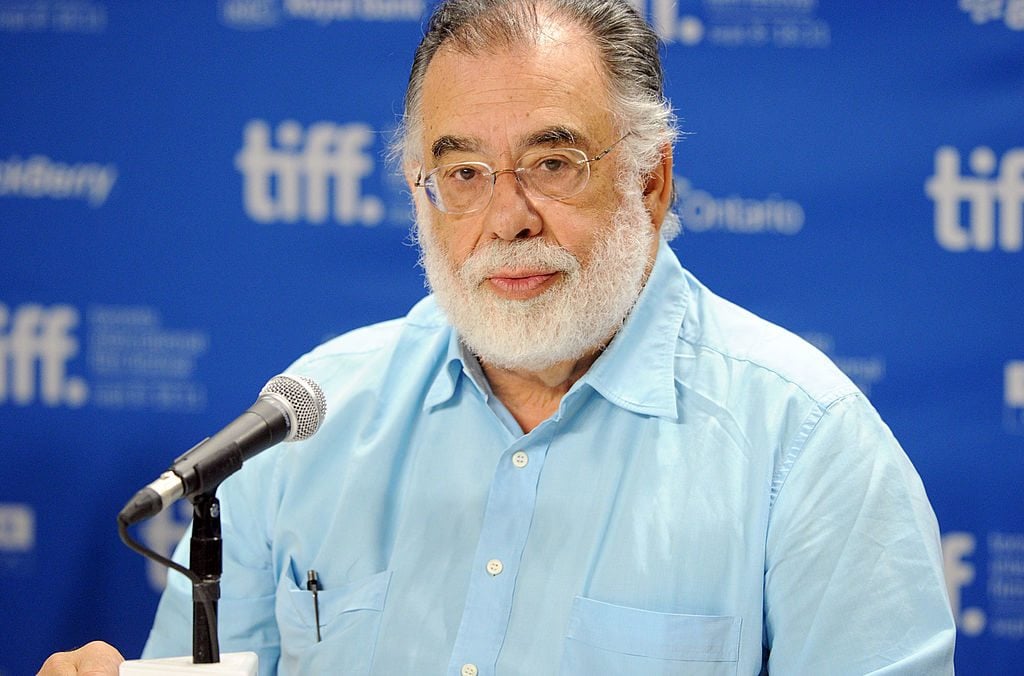
Francis Ford Coppola, a titan of cinema, has profoundly shaped the film industry through his daring artistic vision. From winning five Academy Awards to creating legendary films like “The Godfather” and “Apocalypse Now,” his career has been marked by both monumental successes and devastating setbacks. Now, he faces another financial hurdle, following a risky investment in his latest project.
The Rise of a Filmmaking Legend
Francis Ford Coppola’s journey to becoming a celebrated filmmaker was not without its challenges. In the late 1960s, he was a young director grappling with a string of disappointments. Despite having earned a master’s degree from UCLA and working under famed director Roger Corman, his early films struggled commercially. His 1968 musical “Finian’s Rainbow,” which featured Fred Astaire, flopped at the box office, while his follow-up, “The Rain People,” received critical acclaim but failed to attract audiences.
As his financial situation grew precarious, Coppola co-founded American Zoetrope with fellow filmmaker George Lucas, hoping to create an independent haven for artists. However, the studio’s debut project, Lucas’s “THX-1138,” was a commercial failure, leaving them deep in debt. Desperate for work, Coppola accepted an offer from Paramount Pictures to direct an adaptation of Mario Puzo’s novel, “The Godfather,” a decision that would change the course of his career.
Initially resistant to the book, which he deemed “sleazy,” Coppola took the job out of necessity. The film became a monumental success, earning him three Academy Awards and solidifying his status as one of Hollywood’s most influential figures.
Risk and Reward in Filmmaking
The triumph of “The Godfather” liberated Coppola to pursue his ambitious artistic projects without restraint. In the mid-1970s, he moved to San Francisco and established Zoetrope Studios, envisioning a filmmaker-run operation free from ingrained Hollywood constraints. This venture led to a series of ambitious films, including “The Conversation” and “Apocalypse Now.” While the latter was critically acclaimed, its production was fraught with turmoil, leading Coppola to mortgage his home and pour his personal fortune into the film’s completion. Despite its eventual success and recognition as a masterpiece, Coppola emerged from the experience both emotionally and financially drained.
Coppola’s subsequent project, 1982’s “One from the Heart,” became a financial disaster, costing $25 million but grossing only about $1 million. This failure brought his studio to its knees, culminating in three personal bankruptcies from 1983 to 1992, during which he listed $98 million in liabilities against merely $53 million in assets. To stay afloat, Coppola took on commercial projects, including “Peggy Sue Got Married” and “The Outsiders,” which, while not his artistic zenith, helped restore his financial stability.
A New Chapter in Winemaking
In 1975, buoyed by the success of “The Godfather Part II,” Coppola purchased the deteriorating Niebaum Estate in Napa Valley for $2.2 million, initiating his foray into winemaking. Initially inexperienced in the industry, he sought to revitalize a piece of California’s winemaking heritage. However, financial woes from “Apocalypse Now” and the fallout from “One from the Heart” made the vineyard a double-edged sword, compelling him to embrace the art of winemaking.
By the early 1990s, Coppola experienced a financial resurgence following the success of “Bram Stoker’s Dracula,” enabling him to acquire additional land and establish the Niebaum-Coppola Estate, renowned for its exceptional wines. His ventures extended beyond film, leading to a multi-faceted empire including hotels, restaurants, and lifestyle products. The man once on the brink of financial ruin had transformed himself into a successful entrepreneur.
The Gamble of “Megalopolis”
After decades of redefining his career, Coppola set his sights on “Megalopolis,” a futuristic epic he had envisioned since the early 1980s. With his businesses once again thriving, he committed to self-financing the film, selling off two wineries to raise $100 million. However, the project faced numerous hurdles, from crew resignations to problematic marketing strategies. When “Megalopolis” was finally released in September 2024, it garnered poor reviews and only $14 million at the box office.
A Financial Conundrum
Once worth upwards of $200 million, Coppola’s gamble on “Megalopolis” left him with a severe financial deficit. In March 2025, speaking candidly on the podcast “Tetragrammaton,” he revealed the extent of his losses, stating, “I don’t have any money because I invested all the money, that I borrowed, to make ‘Megalopolis. It’s basically gone.” To recuperate some funds, he announced an auction of seven high-end watches from his personal collection, valued between $3,000 to $1 million each, including a unique F.P. Journe prototype he helped design.
A Legacy of Risk
Francis Ford Coppola’s life and career epitomize the intertwining of art and risk. Few filmmakers have ventured as boldly as he has, continually redefining success and creativity. Although faced with financial challenges today, his relentless spirit suggests that the story of Francis Ford Coppola, the consummate gambler, is far from over.

Meet William, a proud Bethel University alumnus with a fervent passion for lifestyle and culture topics. His keen interest doesn’t stop there; he’s also deeply engrossed in current events of all kinds. William dedicates himself wholeheartedly to this site, thriving on the collaborative energy he shares with Suzanne, his long-standing partner in crime.
Having navigated their university courses side by side for years, their teamwork on the site is nothing short of dynamic. Together, they bring a unique blend of insights, proving that two heads are indeed better than one in delivering compelling content.