Before his rise as a pop music mogul, Lou Pearlman ventured into aviation, leasing various aircraft. However, his fascination with the music industry, partly influenced by his first cousin, Art Garfunkel, shaped his future. Pearlman launched successful businesses, leading to the creation of iconic boy bands like Backstreet Boys and N’SYNC, changing the music landscape. This article explores how much artists truly earn from major tours, contrasting the financial realities of past and present tours.
Lou Pearlman’s Journey to Boy Band Fame
Lou Pearlman began his career in the late 1970s, creating a thriving helicopter taxi service in New York City while also launching a publicly traded company that chartered blimps and private jets to businesses seeking unique advertising solutions. His foray into the music industry began in the 1980s when he was astonished to learn that the boy band New Kids on the Block could afford to charter one of his lavish planes. This realization sparked a new ambition: to form his own boy band.
After spending an impressive $3 million on auditions and recruiting talented songwriters, Pearlman assembled five young singers in 1993 who would become the Backstreet Boys: AJ McLean, Howie Dorough, Nick Carter, Kevin Richardson, and Brian Littrell. He later went on to create N’SYNC, making a lasting impact on the music scene. However, Pearlman’s legacy took a darker turn when he was convicted of running a Ponzi scheme and died in prison in 2016. Today, we focus on the financial dynamics of major musical tours.
The Financial Landscape of Major Tours
While major tours for high-profile artists can generate hundreds of millions in gross revenue, the actual earnings for the artists can be surprisingly low due to significant expenses. Costs associated with transportation, equipment, crew salaries, and venue logistics can quickly eat away at profits. Artists often find themselves needing to travel in private jets, sometimes even renting large aircraft, just to manage the complex schedules.
Even in a best-case scenario where every ticket is sold, artists typically take home only 15-25% of the gross revenue. For instance, Beyoncé’s recent “Cowboy Carter” tour grossed $400 million from 32 stadium shows, yielding around $80 million for her. Despite this substantial amount, it required rigorous touring over several months across the U.S. to achieve. In similar fashion, Taylor Swift’s record-breaking “Eras” tour grossed $2.1 billion over 149 shows, translating to approximately $420 million in profits for her. This emphasizes the immense pressure and effort needed to attain such figures.
The Sphere: A New Era for Backstreet Boys
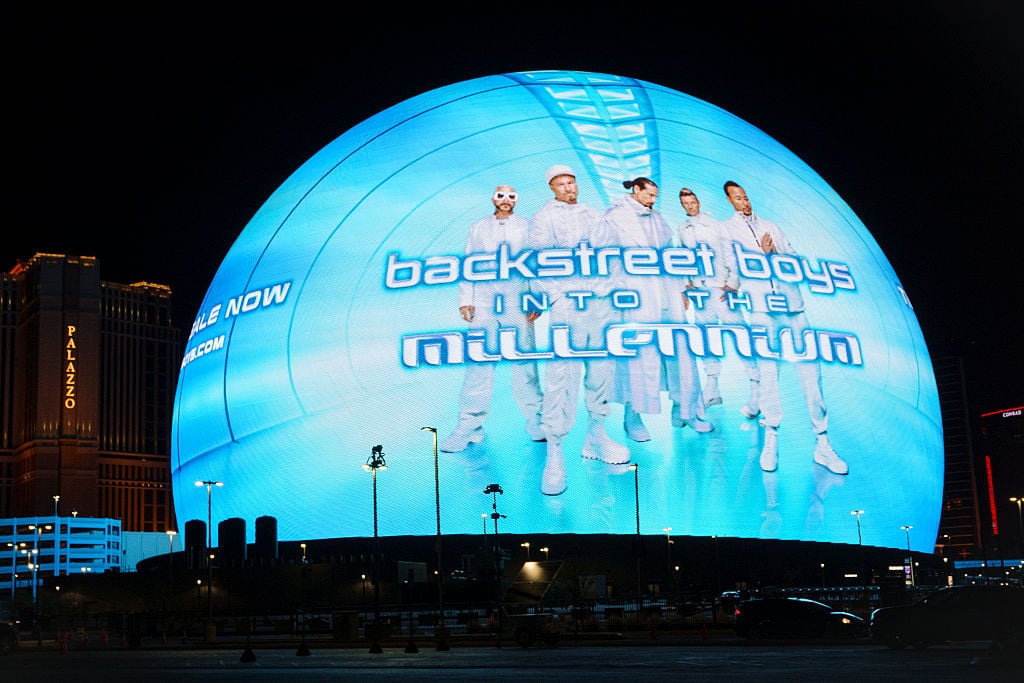
Transitioning from grueling global tours, the Backstreet Boys now perform at the Sphere in Las Vegas, grossing an impressive $4 million each night. The upfront investment in advanced graphics, costing between $7 to $8 million, is quickly recouped after just a few shows, as the venue manages much of the operational overhead, including security and concessions.
With reduced logistical hassles, the group enjoys a higher net outcome, with estimates of an 80% margin. Individual earnings for each member can reach approximately $560,000 per show, accumulating to around $18 million for 35 shows. This model allows them to reap significant rewards without the traditional touring grind.
Comparing Profitability: BSB, Beyoncé, and Taylor Swift
The efficiency of the Backstreet Boys’ current tour model becomes clear when compared to other major artists. While Beyoncé’s “Cowboy Carter” tour averaged about $2.5 million per show and Taylor Swift’s “Eras” tour brought in approximately $2.8 million per show, the Backstreet Boys achieve similar revenue while entertaining just 17,000 fans nightly. This results in a striking $150 net per attendee, far surpassing the profitability of both Taylor and Beyoncé’s larger audiences.
Reflecting on Past vs. Present: The Black & Blue Tour
Looking back to the “Black & Blue World Tour” in 2001, which grossed $315 million across 110 shows, the expense burdens were considerably higher due to the scale of production required for global tours. Despite the high gross earnings, the band’s profit margins were much slimmer, likely yielding around $6 to $9 million per member after covering extensive costs.
In contrast, today’s setup at the Sphere allows for a more profitable and less taxing experience, combining nostalgia with modern technology. This shift indicates that the Backstreet Boys may have found a truly advantageous approach to live performance: performing in a single venue, generating impressive income while minimizing the strain of extensive touring. The future may see them returning for more easy earnings whenever the opportunity arises.

Meet William, a proud Bethel University alumnus with a fervent passion for lifestyle and culture topics. His keen interest doesn’t stop there; he’s also deeply engrossed in current events of all kinds. William dedicates himself wholeheartedly to this site, thriving on the collaborative energy he shares with Suzanne, his long-standing partner in crime.
Having navigated their university courses side by side for years, their teamwork on the site is nothing short of dynamic. Together, they bring a unique blend of insights, proving that two heads are indeed better than one in delivering compelling content.