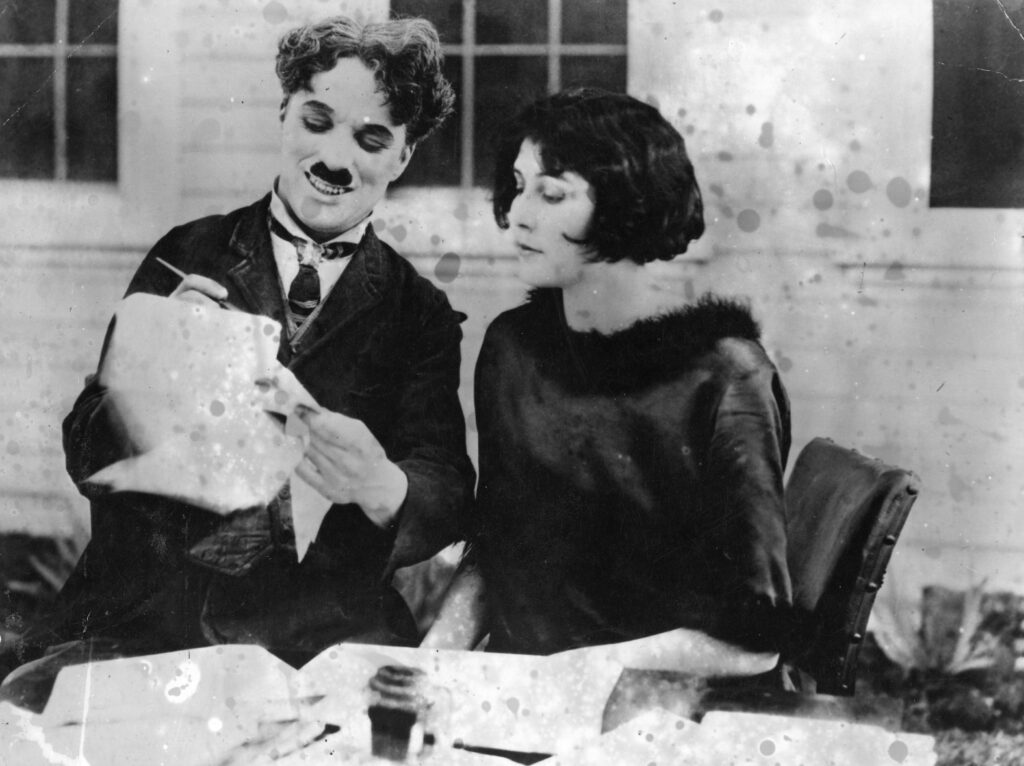
Charlie Chaplin, an iconic figure in cinema history, redefined the art of filmmaking over a career that spanned more than 75 years. With his cheeky bowler hat, distinct mustache, and cane, Chaplin’s character “The Tramp” has become one of the most beloved symbols of silent film. His journey from poverty to worldwide fame not only highlights his artistic genius but also his remarkable ability to navigate the complexities of wealth and personal turmoil.
Early Life and Career Beginnings
Born in London in 1889 to entertainers in the music halls, Charlie Chaplin faced significant challenges during his childhood, including poverty and instability. His father passed away early in his life, and his mother struggled with severe mental illness, ultimately being institutionalized when Chaplin was just 14. To support himself, he began performing on stage at a young age.
At 19, Chaplin joined Fred Karno’s comedy troupe, where he honed his physical comedy skills. His film debut came in 1914 with “Making a Living.” Within a year, his character “The Tramp” became a cultural phenomenon, leading to some of the highest salaries in Hollywood.
- 1915: Signed with Essanay for $1,250 per week plus a $10,000 bonus (approximately $250,000 today).
- 1916: Secured a new contract for $10,000 per week and a $150,000 bonus.
- 1918: Joined First National for $1 million for eight films.
- 1919: Co-founded United Artists with Douglas Fairbanks, Mary Pickford, and D.W. Griffith, gaining exceptional creative and financial authority.
His first major hit with United Artists, “The Kid,” released in 1921, solidified his status as a global superstar.
Stardom and Financial Savvy
More than just a performer, Chaplin assumed multiple roles in the filmmaking process, writing, directing, producing, editing, and even composing music for his films. This comprehensive control allowed him to enjoy the full financial benefits of his work. At one point in the 1920s, his estate’s value reached $16 million, the equivalent of around $215 million today.
Chaplin directed 11 feature films, including timeless classics such as:
- “The Gold Rush” (1925)
- “City Lights” (1931)
- “Modern Times” (1936)
- “The Great Dictator” (1940)
His impact on cinema was so significant that TIME magazine named him one of the “100 Most Important People of the 20th Century.”
Turmoil, Exile, and Oona O’Neill
While Chaplin enjoyed unprecedented success, his personal life was fraught with challenges. He married four times: to Mildred Harris, Lita Grey, Paulette Goddard, and finally to Oona O’Neill, the daughter of the renowned playwright Eugene O’Neill. Their marriage began in 1943 when Chaplin was 53, and Oona was just 18. Despite skepticism about their age difference, they remained together until his passing, raising eight children.
In the 1940s, as Chaplin’s films took on a more satirical tone, he faced a decline in popularity and increased scrutiny during the McCarthy era. In 1952, while aboard the Queen Elizabeth, he learned he would not be permitted to return to the U.S. unless he testified about his political beliefs. Choosing to avoid confrontation, Chaplin and Oona relocated to Switzerland, where they spent the remainder of their lives.
The Buried Fortune
Concerned about the safety of his wealth, Chaplin devised an innovative solution. He added Oona as a cosigner on his U.S. bank accounts and even buried cash in the backyard of his Beverly Hills estate. When Oona returned to America later that year, she literally unearthed the money, converting it into $1,000 bills and sewing the cash into the lining of her mink coat for safe transport to Europe.
Final Years and Legacy
Despite his exile, Chaplin eventually regained his esteemed reputation. In 1972, he made a triumphant return to the U.S. to accept an Honorary Academy Award for his contributions to the art of cinema. His acceptance speech was met with a 12-minute standing ovation, the longest in Oscar history.
Upon his death on Christmas Day in 1977 in Switzerland, the exact value of Chaplin’s estate was uncertain. However, it is known that he left at least $100 million to Oona, which adjusts to about $533 million today. More than four decades after his passing, Chaplin’s legacy of artistic innovation and cultural influence endures, underscoring the remarkable life he led.

Meet William, a proud Bethel University alumnus with a fervent passion for lifestyle and culture topics. His keen interest doesn’t stop there; he’s also deeply engrossed in current events of all kinds. William dedicates himself wholeheartedly to this site, thriving on the collaborative energy he shares with Suzanne, his long-standing partner in crime.
Having navigated their university courses side by side for years, their teamwork on the site is nothing short of dynamic. Together, they bring a unique blend of insights, proving that two heads are indeed better than one in delivering compelling content.