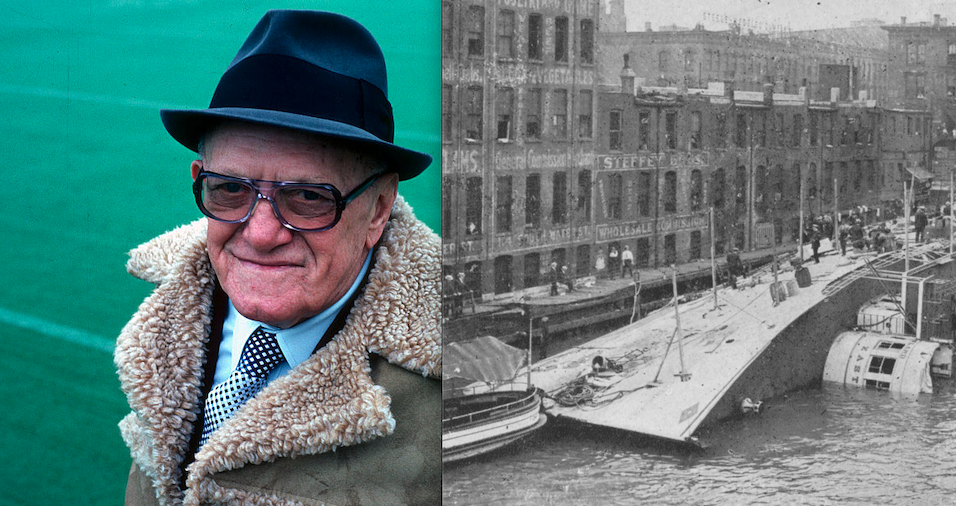
Throughout sports history, there have been numerous pivotal moments that could have altered the landscape forever. Imagine if Ray Allen had missed his crucial three-pointer in Game 6 of the 2013 NBA Finals, or if the Seattle Seahawks had chosen to run the ball at a critical moment instead of attempting a pass. Among these “what-if” scenarios lies one particular tragedy from a century ago that could have reshaped the future of American football—a tale involving a man’s oversleeping that ultimately led to the creation of the NFL.
The SS Eastland Disaster
This year commemorates the 110th anniversary of the tragic SS Eastland Disaster. The SS Eastland, a passenger vessel primarily serving tour purposes, was set to carry employees from Western Electric’s Hawthorne Works in Cicero, Illinois, to a company picnic in Michigan City, Indiana, on July 24, 1915. For many workers, this annual event represented a rare opportunity for relaxation and camaraderie.
However, the Eastland was notorious for its structural flaws. Following the Titanic disaster just three years earlier, ships were modified to accommodate extra lifeboats, which added significant weight and made the Eastland particularly top-heavy. Docked in the Chicago River and loaded to its full capacity of 2,572 people, the ship began to list dangerously. Within 20 minutes, it capsized, resting on its side at the riverbed. Tragically, many passengers attempted to shelter below deck and were trapped when the ship overturned—844 passengers and four crew members lost their lives, marking one of the worst maritime disasters in Great Lakes history.
Getty Images
Among those who had tickets for that fateful voyage was a young man named George Halas, then just 20 years old and working temporarily at Western Electric.
Various accounts exist regarding why Halas missed the boat that day. Some sources suggest that he was occupied with a fitness regimen, as his brother Frank was preparing him for football at the University of Illinois. Other reports imply he intended to play in a company softball game later in the day and was waiting for a later boat. The final theory, articulated by Charles Brizzolara, the son of Halas’s longtime associate, proposes that Halas simply overslept. It’s remarkable to consider that a missed alarm clock may have saved his life.
While Ralph Brizzolara and his brother boarded the ship without Halas, they found themselves in a precarious situation when the Eastland capsized. Luckily, they were rescued through a port window by an unknown individual. Halas, meanwhile, was mistakenly reported among the victims in the newspaper. When two fraternity brothers came to express their condolences, they were astonished to find him alive, marking the close call as a pivotal moment in his life.
In 1920, after Halas took a job at the A.E. Staley Company—sponsors of a local football team called the Decatur Staleys—he became a key figure in establishing a new football league. Meeting in Canton, Ohio, with representatives from other teams, he played a vital role in founding the American Professional Football Association (APFA), which paved the way for what we now know as the NFL.
The Emergence of the NFL
Initially perceived as a league for lesser-known talent, the NFL gained prominence when Halas successfully lured Illinois superstar Red Grange to join the Bears in 1925. In the late 1930s, alongside coach Clark Shaughnessy, Halas modernized the T-formation, exemplified by the Bears’ historic 73-0 victory over the Washington Redskins in the 1940 NFL Championship Game—the largest margin of victory in league history. Halas was influential in shaping the game’s pace and administrative policies, introducing innovative practices such as daily training sessions and film analysis.
A naval veteran who served in both World Wars, Halas also initiated an annual football game featuring the Army, Navy, and Air Force, which raised substantial funds for military relief agencies. He introduced several significant organizational structures to the league, including revenue-sharing policies and enhanced game-day logistics.
Halas served as player, coach, and owner of the Bears from 1919 until 1967, compiling a remarkable coaching record and securing six championships. He was inducted into the Pro Football Hall of Fame in 1963, solidifying his legacy as a pioneer of professional football.
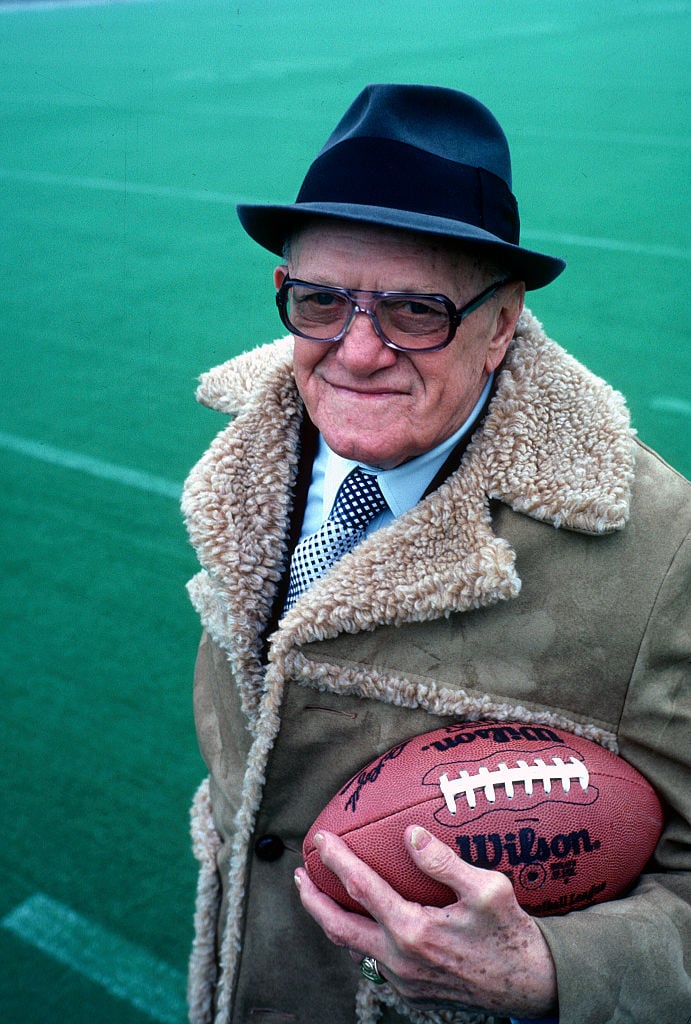
(Photo by Focus on Sport/Getty Images)
Legacy and Present Value
George Halas passed away in 1983 at the age of 88, making him the last surviving participant in that foundational 1920 meeting that launched the NFL. He left behind a rich legacy through his two children, Virginia Halas McCaskey and George Jr., who sadly passed away in 1979.
Today, the Chicago Bears are estimated to be worth $6.5 billion. McCaskey, who died at the age of 102 in 2025, managed a significant stake in the franchise at the time of her passing.
Speculation abounds regarding the potential ramifications for the NFL had Halas boarded the SS Eastland that tragic morning. Ironically, after the ship was raised and repurposed as the USS Wilmette, it may indeed have served as a training vessel where Halas spent time during World War I, underscoring the serendipitous twists of fate that shaped his extraordinary life.
George Halas’s career stands as a compelling example of seizing opportunities and redefining legacies in the realms of sports and business.

Meet William, a proud Bethel University alumnus with a fervent passion for lifestyle and culture topics. His keen interest doesn’t stop there; he’s also deeply engrossed in current events of all kinds. William dedicates himself wholeheartedly to this site, thriving on the collaborative energy he shares with Suzanne, his long-standing partner in crime.
Having navigated their university courses side by side for years, their teamwork on the site is nothing short of dynamic. Together, they bring a unique blend of insights, proving that two heads are indeed better than one in delivering compelling content.