
In recent weeks, injuries related to muscles in the thighs and calves have plagued several NBA stars, sparking discussions about the league’s physical demands. With pre-season injuries affecting big names like Giannis Antetokounmpo and Victor Wembanyama, questions arise around whether the NBA has become too physically taxing for its players.
Awareness Among Front Offices
To understand the situation better, we first sought insight into whether NBA teams and coaches, who are most affected by these injuries, are aware of this pressing issue. ESPN preempted our inquiry by interviewing Warriors coach Steve Kerr ahead of a game against Orlando. Kerr’s response was clear:
“The Warriors’ medical staff believes that wear and tear, speed, and distance are factors contributing to these injuries. Across the NBA, everyone recognizes that it’s easier to score by physically beating your opponent in transition. But when everyone plays this way, games become much faster-paced. Players must cover more ground defensively, especially with the increased three-point shooting. We have all the data; players are running faster and covering more distance than ever before.”
These remarks highlight core issues, supported by various statistics we’ve compiled regarding the current state of play in the NBA.
Increasing Physical Demands in the NBA
Statistically, several trends are notable. ESPN points out that the NBA has never been as fast as it is this season since the 1988-89 season, particularly in terms of game pace and possessions per game. This data correlates with the total distances traveled by teams during games.
In the 2024-25 season, an average NBA team covered approximately 29.5 kilometers per game, an increase of nearly 2.5 kilometers compared to the 2013-14 season when distance tracking began. Additionally, the average movement speed of players at the start of the 2025-26 season (7.1 km/h) is the highest recorded since data collection began.
Data and graph via @MaxKlotz_ (Twitter)
These statistics indicate that the NBA is continuously raising its physical standards in terms of speed and distance, which may lead to increased injury risks as noted by Kerr. However, this remains speculative due to the lack of specific injury data available.
Franchises Taking Precautionary Measures
It is evident that NBA franchises, like the Warriors, are acutely aware of the potential dangers posed by this shift. The data is striking: players labeled as “stars” have logged usage rates below the lowest averages of the previous season just 12 games into the 2025-26 campaign. This trend is comparable to the low figures observed in April 2024, when key players were routinely rested before the playoffs.
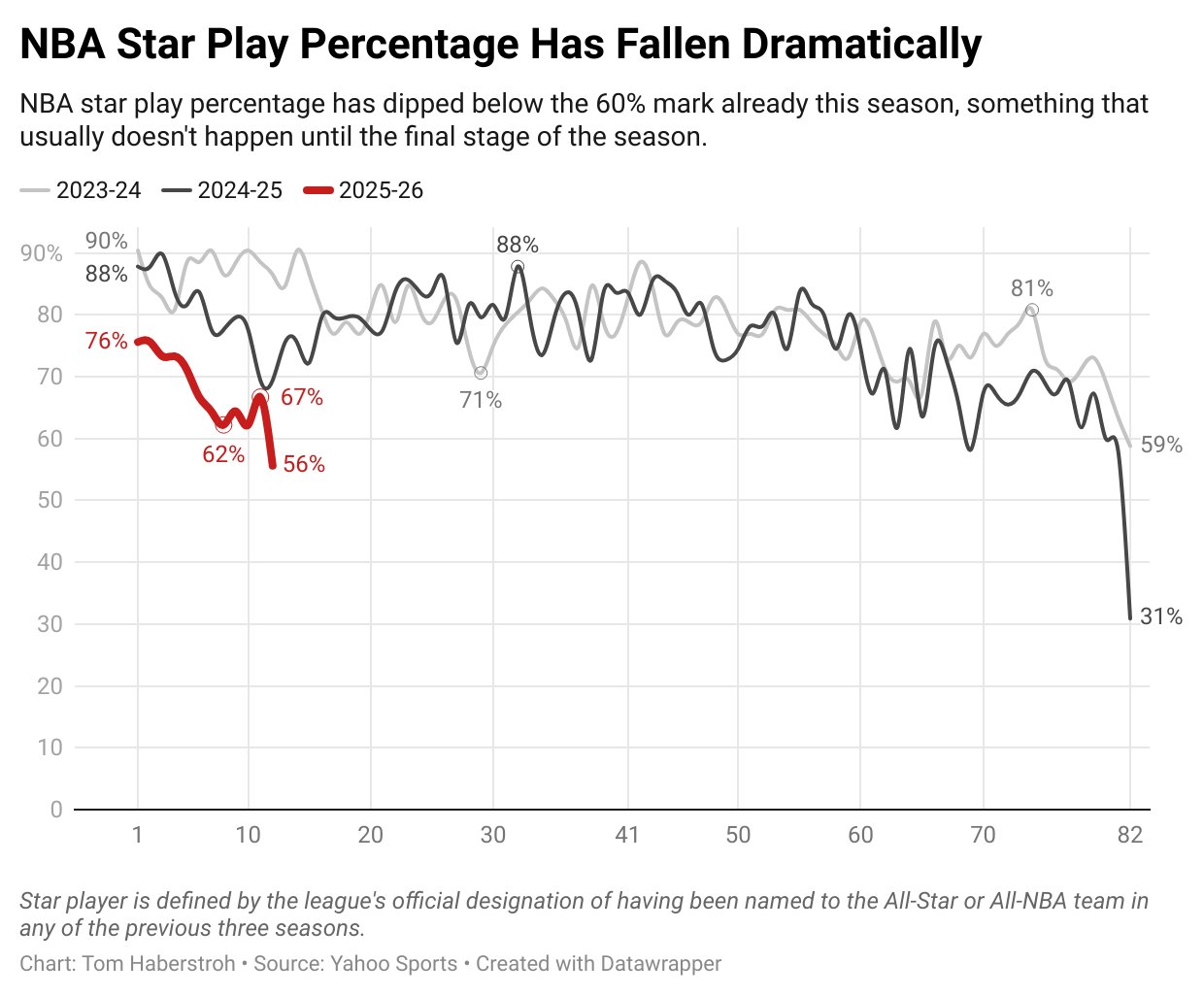
Data and graph via Yahoo Sports and Tom Haberstroh
This trend raises concerns about how the NBA will address this issue, as absent stars lead to diminished revenues from merchandise, ticket sales, and streaming. Additionally, we have begun examining injury statistics this season, comparing them to previous regular seasons after the same number of games.
Examining Victor Wembanyama’s Case
Now let’s take a moment to focus on Victor Wembanyama, who is sidelined due to a calf injury, expected to keep him out for “a few weeks.” Many believe that taller players, like Wembanyama, may be more adversely affected by the NBA’s evolving physical demands. The increased strain on their muscles during movements could lead to higher injury risks.
However, there are no definitive data connecting calf injuries to later complications such as Achilles tendons ruptures. According to Brian Suttener, a sports medicine expert, research shows no significant correlation between these injury types. Furthermore, a study published in the National Library of Medicine tracked 51 cases of Achilles tendon ruptures in the NBA, with only 5% following calf muscle injuries — too few to draw any clear conclusions.
Injuries Remain Steady but Prompt Reevaluation
Returning to our broader discussion on muscular injuries at the start of the NBA season, historical data presents a nuanced counter-analysis. According to Jeff Stotts, an analyst for Rotowire specializing in NBA injuries, the number of muscular injuries this season is not statistically abnormal compared to the last five seasons.
The latest updates on Wemby and AD calf injuries got me curious. To start, calf injuries are NOT up this season when compared to the last 5 seasons. It’s common to see a spike in soft tissue injuries during the preseason & the first 20 games of the year.
While injuries are manageable, the concern raised by injured superstars points to significant questions about how the NBA operates. Teams are increasingly protective of their stars, aiming to ensure their availability for crucial playoff moments, but this inevitably leads to financial losses during games where players are absent.
So how might this issue be resolved? Perhaps by reducing the game schedule. NBA Commissioner Adam Silver has reiterated that there’s no statistical basis linking injuries to the total number of games played. This stance remains firmly at odds with calls for a reduced schedule.
“I don’t see the point in reducing the number of games. Critics often say it will lead to fewer injuries, but there’s absolutely no data to support that. If it were true, you’d expect to see more injuries in April than in October, and that’s not the case.”
Kerr himself appears resigned on the matter, suggesting a more compact season to mitigate injury risks but agreeing that financial implications make such a bold change challenging to implement.
What Can We Conclude?
In summary, the recent surge in injuries is not statistically significant when compared to historical data. However, it’s not as simple as it might seem; teams possess extensive medical analytics that are key to understanding these trends, and the publicly available data may not be sufficient for conclusive assessments. The increase in star injuries indeed opens up a critical conversation about improving how the NBA can enhance its spectacle while ensuring the economic viability of the league and the health of its players.
Sources: Rotowire, ESPN, NBA, National Library of Medicine, Yahoo Sports.

Meet William, a proud Bethel University alumnus with a fervent passion for lifestyle and culture topics. His keen interest doesn’t stop there; he’s also deeply engrossed in current events of all kinds. William dedicates himself wholeheartedly to this site, thriving on the collaborative energy he shares with Suzanne, his long-standing partner in crime.
Having navigated their university courses side by side for years, their teamwork on the site is nothing short of dynamic. Together, they bring a unique blend of insights, proving that two heads are indeed better than one in delivering compelling content.