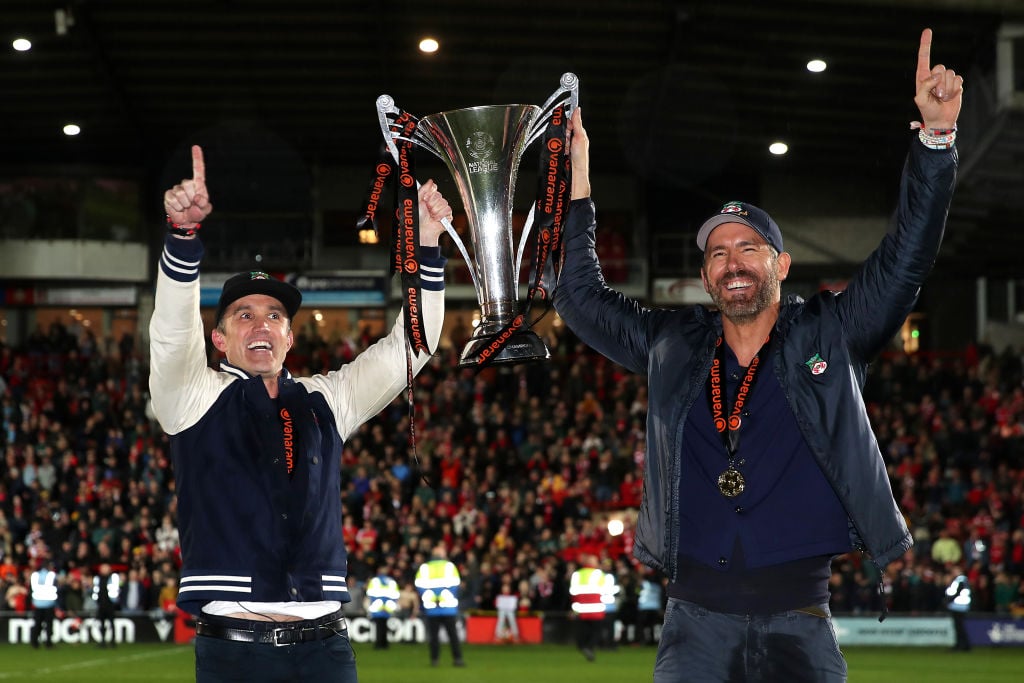
In a surprising move that initially raised eyebrows, Hollywood actor Ryan Reynolds and television star Rob McElhenney acquired Wrexham A.F.C., a struggling Welsh soccer club, in early 2021. What began as a puzzling venture has now become a remarkable success story, transforming Wrexham from near-bankruptcy to a globally recognized sports brand valued at around $500 million within just a few years.
From Bankruptcy Risk To Break-Even Survival
Founded in 1864, Wrexham is one of the oldest professional football clubs in the world. However, by the early 2000s, years of poor management put the club on the verge of extinction. Wrexham entered administration in 2004 and faced relegation from the Football League in 2008 after an impressive 87-year run. By 2011, the club was in dire straits, grappling with a winding-up order due to unpaid taxes.
During its darkest days, fans, united under the Wrexham Supporters Trust, managed to raise around £127,000 (approximately $165,000) in a single day to keep the club afloat. Under this fan-driven stewardship, Wrexham stabilized but remained in a precarious financial state, with annual revenue fluctuating between £1.1 million (around $1.4 million) and £2.5 million (approximately $3.2 million). The pandemic in 2020 further decimated matchday revenue, leaving the club in urgent need of new investment or a major strategic overhaul.
The “Free” $2 Million Purchase
Reports often state that Reynolds and McElhenney “bought” Wrexham for $2 million, but this is somewhat misleading. The duo struck a deal with the Wrexham Supporters Trust that enabled them to gain full ownership for a nominal sum, without an initial cash outlay. They committed to injecting around £2 million (approximately $2.6 million) into the club’s operations.
Additionally, they laid down several essential conditions:
- The club would remain in Wrexham.
- The team name and crest would not be altered.
- Investment would extend to infrastructure and the women’s team.
The Startup Strategy: Lose Money To Make Money
Rather than aiming for immediate profitability, Reynolds and McElhenney sought to build a global media brand. This approach involved considerable upfront investment. Over their initial years at the helm, they poured more than £15 million (around $19 million) of their own funds into the club, which allowed for rapid expansion and covered operational losses.
This funding supported initiatives such as:
- Offering competitive salaries to attract high-quality players.
- Breaking transfer records to expedite promotions.
- Enhancing staff and infrastructure.
- Providing significant promotion bonuses tied to on-field performance.
While revenue soared as a result of these decisions, so did losses. In the latest season, Wrexham reported an impressive revenue of £33.35 million (approximately $44 million) but also incurred an operating loss of about £14.85 million (around $20 million), accumulating over £25 million (approximately $32 million) in total losses under their ownership. While such figures might raise red flags for traditional sports investors, they highlight a strategic choice prioritizing growth over short-term gains.
The Revenue Explosion
The financial growth trajectory is striking:
- Pre-2021: ~£1.1 million (around $1.4 million)
- 2021–22: £6 million (approximately $7.7 million)
- 2022–23: £10.4 million (around $13.3 million)
- 2023–24: £26.7 million (approximately $34 million)
- 2024–25: £33.35 million (around $44 million)
Future projections suggest revenues could reach between £46 million (approximately $59 million) and £50 million (around $64 million) next season. Notably, over half of the club’s revenue now originates from outside the UK and Europe, particularly North America, underscoring its transition into a media-driven sports enterprise.
The breakdown of revenue sources is as follows:
- Sponsorships: £17.3 million (around $22 million)
- Matchday revenue: £5.9 million (approximately $7.5 million)
- Merchandise: ~£5 million (about $6.4 million)
The “Welcome To Wrexham” Flywheel
The FX/Hulu documentary series “Welcome to Wrexham” is a vital component of this success, despite not directly contributing to the club’s revenue stream. It has transformed Wrexham into a global narrative, fostering emotional connections and building a fan base in the U.S. This newfound relevance has attracted sponsorship deals from major brands that prioritize engagement over league standings.
As a part of this symbiotic relationship, Wrexham also pays a “marketing contribution” to the series’ production entities, amounting to roughly £2.59 million (around $3.3 million) last year, reflecting the series’ significance to the club’s commercial strategy.
Zero Debt And A $500 Million Valuation
Despite substantial spending, a crucial decision was to avoid encumbering the club with long-term debt. At one point, Wrexham was tied to a £27.5 million (approximately $35 million) loan related to its growth strategy, but Reynolds and McElhenney chose to pay it off themselves, enhancing the club’s appeal to outside investors.
In late 2025, the club received a valuation between $450 million and $500 million following an investment from minority shareholders, including Apollo Sports Capital. This acquisition confirmed the viability of their strategy and allowed the club to settle previous shareholder loans.
The Bigger Picture
Wrexham’s journey exemplifies more than just a classic underdog sports narrative; it serves as a blueprint on how modern sports franchises can be constructed and expanded. Traditionally, lower-league football clubs were restricted by local economics and sponsorships. Wrexham’s approach of capturing a global audience has redefined this paradigm.
However, it’s essential to recognize the unique factors that enabled this success. Most lower-league teams are not acquired by widely recognized celebrities, nor do they typically launch hit international documentaries. Very few owners would be willing to absorb substantial losses while emphasizing long-term brand development over immediate financial returns.
While Wrexham’s strategy offers valuable insights, it also highlights the difficulty of replicating such success in different contexts. Reynolds and McElhenney’s experience illustrates that a club’s worth is not solely tied to its league position or local following; global visibility, storytelling, and brand identity can significantly elevate its potential.

Meet William, a proud Bethel University alumnus with a fervent passion for lifestyle and culture topics. His keen interest doesn’t stop there; he’s also deeply engrossed in current events of all kinds. William dedicates himself wholeheartedly to this site, thriving on the collaborative energy he shares with Suzanne, his long-standing partner in crime.
Having navigated their university courses side by side for years, their teamwork on the site is nothing short of dynamic. Together, they bring a unique blend of insights, proving that two heads are indeed better than one in delivering compelling content.