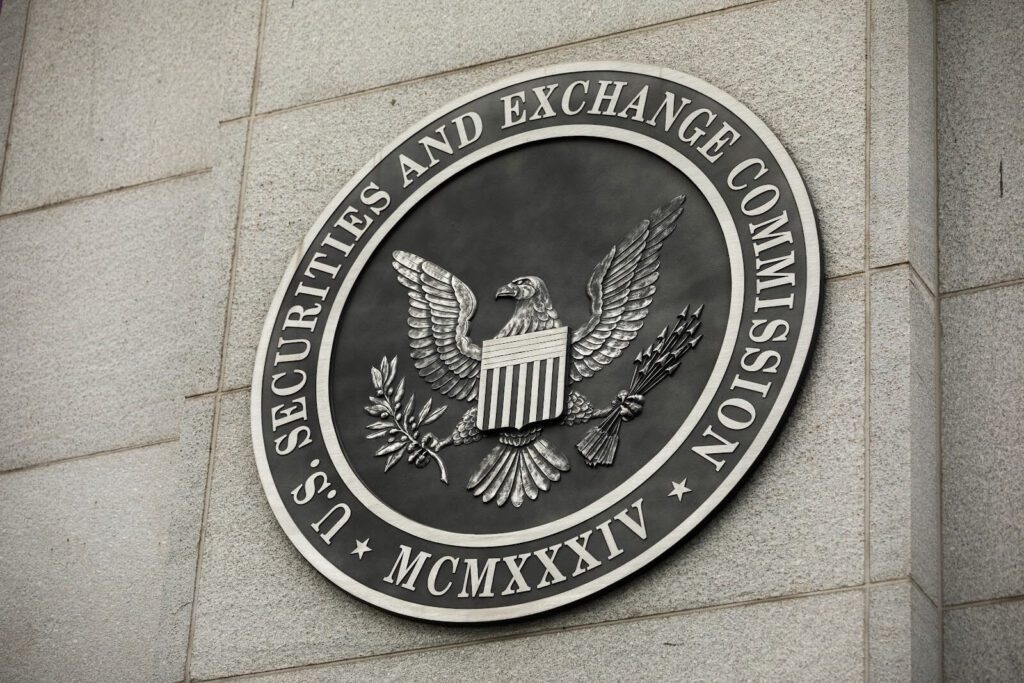
The U.S. Securities and Exchange Commission (SEC) has made a significant move that could transform the crypto ETF landscape by revoking the need for individual 19b-4 filings from cryptocurrency ETF issuers.
SEC Takes Bold Steps in Crypto ETF Regulation
The SEC has recently requested that issuers of cryptocurrency-based ETFs, including those linked to Litecoin, XRP, Solana, Cardano, and Dogecoin, withdraw their pending 19b-4 applications. This action follows the SEC’s adoption of generic listing standards, which eliminate the requirement for each ETF to undergo a separate regulatory filing process.
🚨SCOOP: The @SECGov has asked issuers of $LTC, $XRP, $SOL, $ADA, and $DOGE ETFs to withdraw their 19b-4 filings following the approval of the generic listing standards. I am told withdrawals could start happening as soon as this week.
— Eleanor Terrett (@EleanorTerrett) September 29, 2025
Understanding the Shift to Generic Standards
Approved on September 17, 2025, the shift to generic listing standards allows exchanges to list ETF products based on commodities, including cryptocurrencies, without the need for individual 19b-4 filings. This change has been designed to streamline the approval process and reduce uncertainties for fund managers and investors.
Under the new framework, issuers will now focus on S-1 registration statements, which remain a crucial component of the approval process. By eliminating redundant filings, the SEC aims to speed up procedures and align crypto ETFs with established frameworks for traditional commodities like gold and oil.
Implications for Potential Crypto ETF Issuers
For issuers, this development opens a more direct pathway to market entry. They no longer need to prepare and wait for lengthy 19b-4 reviews, which could previously take up to 240 days. The new system enables exchanges to use predefined criteria when listing ETFs, potentially leading to quicker approvals, sometimes within days following S-1 approval.
This rapid timeline has sparked optimism in the market, with analysts suggesting that several crypto products could see a fast-tracked deployment. However, this also creates a race among issuers to ensure their S-1 filings meet SEC standards, as the speed and preparation of these submissions will determine who first captures the market under the new rules.
Timelines and Conditions for Approval
Nonetheless, the shift does not mean that all crypto assets qualify immediately. A critical requirement is that the futures contracts linked to an asset must be traded for at least six months on a CFTC-regulated exchange. This stipulation ensures sufficient market maturity before related ETFs can launch.
For example, XRP futures began trading on May 19, 2025, setting the earliest possible approval date for ETFs under the new standards to November 19, 2025. Other altcoins, including Litecoin (LTC), Solana (SOL), Cardano (ADA), and Dogecoin (DOGE), must also meet the same futures trading requirement before qualifying.
Market Impact and Risks
The SEC’s decision is seen as a vital step forward for the cryptocurrency industry, as placing crypto ETFs alongside established commodity products provides issuers and investors with a clearer, more predictable market entry pathway. This change could spur institutional demand for exposure to altcoins, further integrating digital assets into traditional finance.
However, uncertainties remain. Bloomberg analyst James Seyffart has cautioned that an impending U.S. government shutdown could complicate the approval timeline for new ETF filings.
add in the potential for a government shutdown and this can get wonk!
— James Seyffart (@JSeyff) September 29, 2025
Current data from Polymarket indicates a strong possibility of a shutdown by October 1, a scenario that could hinder the SEC’s ability to process filings. Even in the absence of such disruptions, some analysts warn that the hype surrounding ETF approvals could lead to a temporary pullback once products are launched.

Meet William, a proud Bethel University alumnus with a fervent passion for lifestyle and culture topics. His keen interest doesn’t stop there; he’s also deeply engrossed in current events of all kinds. William dedicates himself wholeheartedly to this site, thriving on the collaborative energy he shares with Suzanne, his long-standing partner in crime.
Having navigated their university courses side by side for years, their teamwork on the site is nothing short of dynamic. Together, they bring a unique blend of insights, proving that two heads are indeed better than one in delivering compelling content.