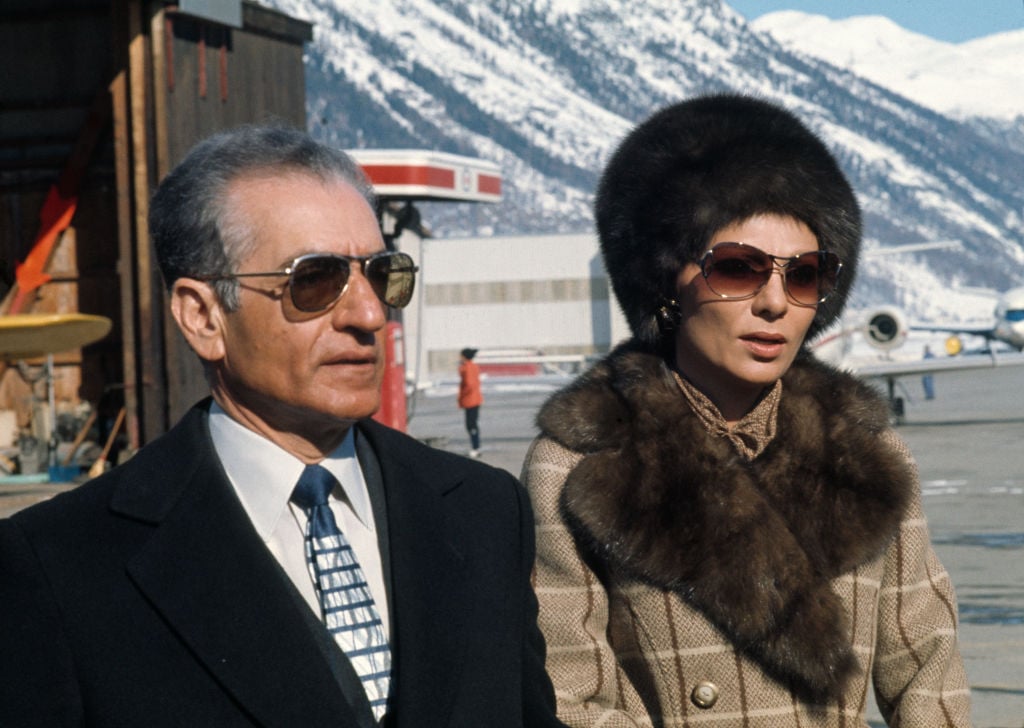
Historically known as Persia, Iran has witnessed the transformation of its oil industry from a nuisance to a vital global commodity. The discovery of significant oil deposits in the early 20th century coincided with the rise of political figures who would shape the nation’s future. This article explores how oil wealth influenced Iran’s monarchy and the socio-political landscape, leading to eventual uprisings and regime changes.
The Turning Point of Oil Discovery
For centuries, the region now known as Iran suffered from an abundance of crude oil that was largely considered useless. It was only in the early 1900s, with the introduction of the automobile and the discovery of extensive oil reserves in southwestern Persia, that oil began to wield its true potential. The year 1908 marked both the debut of Henry Ford’s Model T and the identification of vast oil deposits that would shape the economy and politics of Iran.
Fast forward to 1914, and Iran was under the rule of Ahmad Shah Qajar, the last monarch of the Qajar dynasty. Ascending to the throne at merely 11 years old, Ahmad’s inexperience allowed foreign powers, especially Britain and Russia, to manipulate the puppet strings of the nation. This led to a significant agreement between Iran’s tribal leaders and the Anglo-Persian Oil Company, later known as British Petroleum, allowing for the extraction and exportation of Iranian oil primarily to fuel the Royal Navy.
Ahmad Shah’s reign gave way to Reza Khan Pahlavi, a military officer who, following a coup in 1921, would go on to establish the Pahlavi dynasty. His rule introduced modernization and attempted to reduce foreign influence, though British control, especially in the oil sector, remained deeply woven into Iran’s economic fabric.
Rise of the Pahlavi Dynasty and the Oil Industry
In 1935, the nation formally transitioned from Persia to Iran, a name rooted in ancient Persian literature. Reza Shah initiated policies aimed at reclaiming Iran’s wealth from foreign domination, particularly in the oil sector. As tensions grew over oil concessions, the British expressed concern over Reza Shah’s assertiveness.
World War II brought further upheaval when Britain and the Soviet Union invaded Iran in 1941, citing Reza Shah’s alleged ties to Nazi Germany. He was forced to abdicate, making way for his son, Mohammad Reza Pahlavi, who reigned amidst growing nationalistic sentiments. In 1951, the popular Prime Minister Mohammad Mossadegh undertook the nationalization of the Anglo-Iranian Oil Company, provoking a strong response from Western powers.
In 1953, the CIA and MI6 orchestrated Operation Ajax, leading to Mossadegh’s removal and reinstating the Shah with near-absolute authority. Although this coup preserved Western access to Iranian oil, it left a lasting economic impact that would resonate throughout Iran’s future.
Extravagance and Public Discontent
Following the coup, the Shah quickly capitalized on Iran’s oil revenues, launching himself into an era of extravagance. His economic policies led to unprecedented oil wealth, with billions flowing into the national treasury. Yet, amidst this wealth, there were claims of corruption, with vast sums of money allegedly disappearing into private accounts and the Shah’s family-owned Pahlavi Foundation, a vast entity that controlled significant portions of the Iranian economy.
As inflation surged and income inequality widened in the late 1970s, public frustration boiled over. Demonstrations erupted across the country, fueled by widespread discontent regarding the Shah’s opulence, which stood in stark contrast to the struggles of ordinary Iranians. In January 1979, the Shah fled Iran, leaving behind a rapidly destabilizing monarchy.
The Aftermath and New Beginnings
The Islamic Republic that emerged promised to dismantle the previous regime’s institutions. However, new power structures quickly developed, with entities like Setad, originally established to manage confiscated royal assets, evolving into a powerful economic force under Supreme Leader Ali Khamenei. Today, it controls an estimated $200 billion in assets, marking a shift from one form of centralized power to another.
The legacy of Mohammad Reza Pahlavi endures as a polarizing subject. Supporters credit him with modernizing Iran, while critics condemn the exploitation of national wealth for personal gain. His death in exile in 1980 marked the end of an era but set the stage for ongoing struggles over wealth distribution and governance in Iran.

Meet William, a proud Bethel University alumnus with a fervent passion for lifestyle and culture topics. His keen interest doesn’t stop there; he’s also deeply engrossed in current events of all kinds. William dedicates himself wholeheartedly to this site, thriving on the collaborative energy he shares with Suzanne, his long-standing partner in crime.
Having navigated their university courses side by side for years, their teamwork on the site is nothing short of dynamic. Together, they bring a unique blend of insights, proving that two heads are indeed better than one in delivering compelling content.