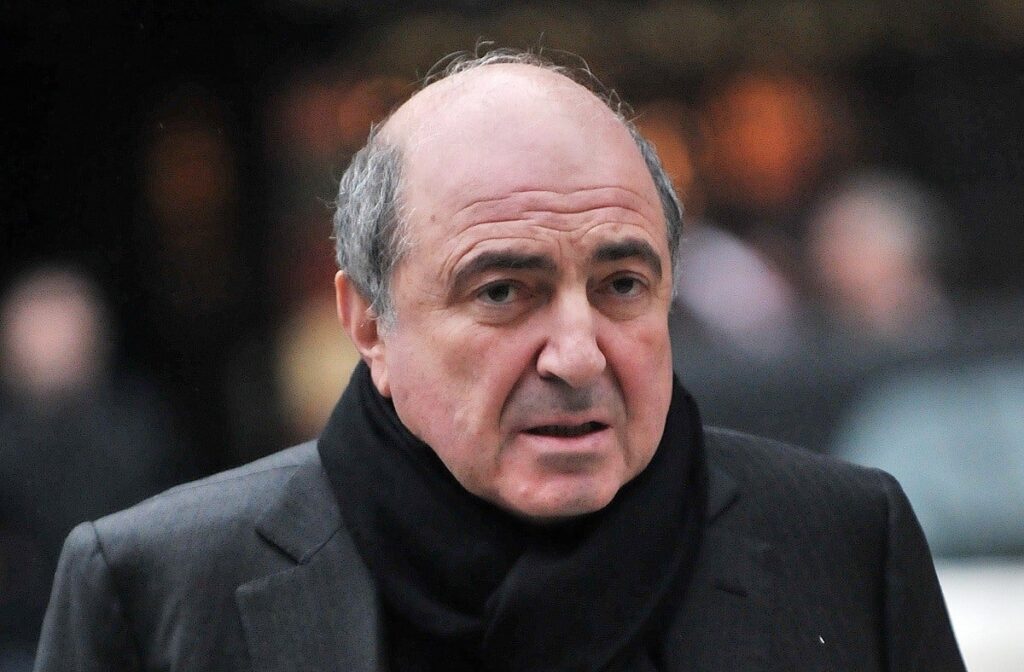
In the tumultuous aftermath of the Soviet Union’s dissolution, Boris Berezovsky shifted from mathematician to influential oligarch, shaping modern Russian politics. Once celebrated as a kingmaker who backed Boris Yeltsin and helped launch Vladimir Putin’s career, his fortunes took a drastic turn, leading him from power to exile. His life story offers a chilling warning about the volatile nature of political alliances in Russia, particularly in the context of the systemic violence against dissenters that has emerged since the country’s invasion of Ukraine.
A Mathematician Turned Opportunist
Boris Berezovsky, born in Moscow in 1946 to a Jewish family, enjoyed a promising career in mathematics and engineering, culminating in a leadership position at the USSR Academy of Sciences. By the late 1980s, he was recognized for his scholarly contributions, with numerous publications to his name.
However, the onset of perestroika under Mikhail Gorbachev ignited a shift toward business for Berezovsky. In 1989, he co-founded LogoVAZ with Badri Patarkatsishvili, capitalizing on the economic turmoil of the collapsing Soviet Union. The company thrived amidst hyperinflation, delaying payments while the ruble’s value plummeted.
By 1994, LogoVAZ had emerged as Russia’s largest car dealership, closely associated with AvtoVAZ, the manufacturer of the Lada brand. Berezovsky adeptly profited from instability, a tactic that would shape his legacy. Fast forward three decades, and the same industry now faces re-nationalization, as Western sanctions have forced foreign partners to exit Russia.
Surviving Assassination… And Entering Power
Berezovsky’s ascent was fraught with peril. In 1994, he survived a near-fatal car bombing that claimed the life of his driver, marking his entrance into Russia’s treacherous political landscape. Shortly thereafter, he used his connections to penetrate President Boris Yeltsin’s inner circle and expanded into media, taking control of ORT (Channel One), Russia’s most influential television network.
This media acquisition granted him narrative control, a crucial asset in shaping public perception.
The “Davos Pact” And The Birth Of Modern Media Manipulation
In 1996, Berezovsky joined a coalition of oligarchs known as the “Davos Pact,” collaborating to ensure Yeltsin’s re-election amid a rising communist threat. They strategically manipulated media coverage to sway public opinion, vilifying opponents and instilling a fear of a return to Soviet rule. The strategy proved successful, with Yeltsin emerging victorious, thereby cementing the oligarchs’ grip on Russian politics.
The Creation Of Vladimir Putin
By the late 1990s, Berezovsky was part of an elite group known as “The Family,” tasked with selecting Yeltsin’s successor. That successor, Vladimir Putin, was a political unknown at the time, and Berezovsky was instrumental in helping him ascend to the prime ministerial role in 1999. Using his media network, he actively promoted Putin’s candidacy in the 2000 presidential election.
Putin won, but the alliance quickly soured.
Fast Friends, Faster Enemies
Shortly after taking office, Putin faced criticism from Berezovsky. Within months, the oligarch resigned from government and began opposing what he viewed as a drift toward authoritarianism. In a bid to consolidate power, Putin initiated probes into Berezovsky’s business dealings, culminating in criminal charges. By 2001, he was in exile, having fled to the United Kingdom and received political asylum.
Following his departure, Berezovsky’s assets were dismantled or seized, and his media empire was absorbed by the state.
Exile, Courtroom Wars, And Financial Collapse
In London, Berezovsky reinvented himself as a vocal critic of Putin but never regained his former influence. He sold significant assets, including his stake in ORT to Roman Abramovich, who ultimately transferred control to the Kremlin. Berezovsky’s dealings became the subject of legal battles, including a landmark case against Abramovich which he lost, further tarnishing his financial and reputational standing. By 2012, Russian courts had convicted him in absentia of several charges including fraud.
The Litvinenko Connection
One of the more shocking incidents associated with Berezovsky was the assassination of Alexander Litvinenko, a former FSB agent who had alleged that Russian security forces targeted Berezovsky. Litvinenko was poisoned in London in 2006, and suspicions pointed toward the Kremlin. A UK public inquiry later concluded that the assassination was likely sanctioned by Putin and security chief Nikolai Patrushev, with Russia being held responsible by the European Court of Human Rights in subsequent rulings.
The Final Collapse
By the early 2010s, Berezovsky faced escalating legal challenges, financial pressures, and personal issues, including a taxing divorce that drained his resources. Indications suggested that by 2013, he was significantly impoverished. In March of that year, he was found dead in his Berkshire home with a ligature around his neck, leading to an official ruling of an open verdict. Friends described him as increasingly isolated and despondent, with reports claiming he attempted to sell personal items in his final days.
The Abramovich Irony
In a notable twist, Roman Abramovich, once Berezovsky’s protégé and later rival, encountered his reckoning after the 2022 invasion of Ukraine. He faced sanctions, sold Chelsea Football Club, and endured asset freezes. Reports indicated he experienced a suspected poisoning during peace negotiations, suggesting that the high-stakes world of Russian oligarchy continues to ensnare even the most powerful.
The Prototype
More than a decade after his death, Boris Berezovsky’s life serves as a cautionary tale. No longer simply a disgraced oligarch, he represents the archetype of a system rewarding loyalty while punishing dissent. The architects of modern Russia believed they were in control, yet Berezovsky’s tragic fate illustrates that the very system they built could ultimately dictate their downfall.
Meet William, a proud Bethel University alumnus with a fervent passion for lifestyle and culture topics. His keen interest doesn’t stop there; he’s also deeply engrossed in current events of all kinds. William dedicates himself wholeheartedly to this site, thriving on the collaborative energy he shares with Suzanne, his long-standing partner in crime.
Having navigated their university courses side by side for years, their teamwork on the site is nothing short of dynamic. Together, they bring a unique blend of insights, proving that two heads are indeed better than one in delivering compelling content.