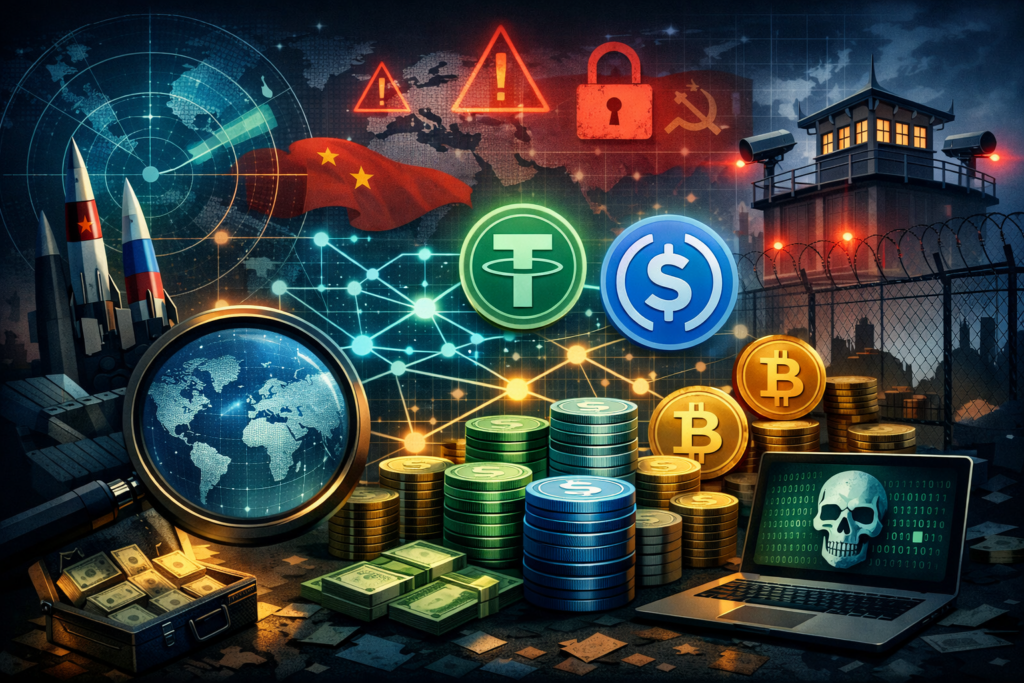
In 2025, illicit cryptocurrency transactions reached unprecedented levels due to global sanctions, reshaping how money is moved across borders and highlighting the adaptability of sanctioned entities in the evolving crypto landscape.
Rise of Illicit Activity Amid Sanctions
- Chainalysis reported $154 billion in illicit crypto inflows, primarily linked to sanctioned entities.
- Russia’s A7A5 token, backed by the ruble, processed over $93.3 billion in transactions in a year.
- Despite rapid growth, illicit transactions still account for less than 1% of total crypto activity.
The illicit activity within the cryptocurrency sector surged in 2025 not mainly due to a spike in everyday crypto crime, but rather due to a structural shift in how states and sanctioned entities manage their money. As global financial restrictions widened, blockchain networks became increasingly viewed as alternative channels for cross-border transfers, which are more challenging to block or monitor compared to traditional systems.
A new report from Chainalysis indicates that this transformation is altering the form, scale, and key players in the illicit crypto ecosystem. The report highlighted that illicit crypto addresses received a staggering $154 billion in 2025, a 162% increase from $59 billion in 2024. Much of this growth has been attributed to permitted actors, who are moving large sums of money on-chain.
While illicit activities represent less than 1% of total cryptocurrency transactions, their rapid expansion underscores how sanctions influence blockchain utilization in unprecedented ways.
Sanctions Boost On-Chain Activity
Chainalysis described 2025 as a watershed year, marked by an unprecedented volume of activities linked to nation-state behaviors. Unlike previous phases characterized by hacks, scams, and darknet markets, recent activity has exhibited higher levels of coordination and technical sophistication. This trend reflects a growing familiarity with blockchain tools among sanctioned entities facing restricted access to the global banking system.
The global scale of sanctions has significantly escalated. In May, the Global Sanctions Inflation Index estimated that nearly 80,000 individuals and entities are currently under sanction. A separate study by the Center for a New American Security revealed that the U.S. added 3,135 entities to its Specially Designated Nationals and Blocked Persons list in 2024, the highest annual total ever recorded. This expanding sanctions environment has increased the incentives for seeking alternative settlement systems.
Russia’s Rising Role in Illicit Flows
Russia has emerged as a major contributor to the surge in illicit cryptocurrency flows, facing substantial international sanctions since its invasion of Ukraine. In February 2025, Russia introduced a digital token backed by the ruble, named A7A5. According to Chainalysis, this token processed over $93.3 billion in transactions within less than a year.
The use of a state-backed token illustrates how sanctioned governments are experimenting with blockchain-based instruments to maintain commercial and financial connectivity. This strategy marks a departure from past cryptocurrency usage patterns, where states mainly benefitted indirectly from illicit networks rather than actively participating in token-based systems.
Stablecoins Take Center Stage
Stablecoins played a dominant role in illicit crypto activity throughout 2025, accounting for 84% of the total volume of illegal transactions. Chainalysis linked this phenomenon to their price stability, high liquidity, and ease of cross-border transfers. These same features that facilitate legitimate payments and remittances have also made stablecoins appealing to sanctioned users seeking predictable settlements.
The growing reliance on stablecoins signifies a shift away from volatile assets for illicit transfers, with an increased focus on efficiency, reliability, and scalability, particularly for high-value transactions involving sanctioned entities.
Criminal Activity Remains a Smaller Portion
Despite record illicit volumes, Chainalysis emphasized that criminal activity represents only a small fraction of the broader crypto economy. Overall, on-chain activity has significantly increased over the year, keeping illicit transactions below 1% of total volume, although their absolute value has skyrocketed. Other forms of crypto-related crime have persisted alongside sanctioned flows. Blockchain security firm PeckShield documented more than 20 major exploits in December, including address poisoning scams and private key leaks that resulted in losses of several tens of millions of dollars.

Meet William, a proud Bethel University alumnus with a fervent passion for lifestyle and culture topics. His keen interest doesn’t stop there; he’s also deeply engrossed in current events of all kinds. William dedicates himself wholeheartedly to this site, thriving on the collaborative energy he shares with Suzanne, his long-standing partner in crime.
Having navigated their university courses side by side for years, their teamwork on the site is nothing short of dynamic. Together, they bring a unique blend of insights, proving that two heads are indeed better than one in delivering compelling content.