On New Year’s Day 2026, a routine traffic stop in northeastern Pennsylvania led to a startling revelation involving Lenny Dykstra, a once-legendary figure in Major League Baseball. During the stop, state police discovered narcotics and related paraphernalia inside the vehicle, where Dykstra was a passenger. His attorney quickly stated that the drugs were not Dykstra’s. Regardless of the case’s outcome, it serves as another chapter in the ongoing saga of a man whose remarkable rise in sports has devolved into a cautionary tale.
The Rise of “Nails”
Before police reports overshadowed his statistics, Lenny Dykstra established his reputation through sheer determination. Drafted in 1981 by the New York Mets as a 13th-round pick, he was an unlikely candidate for stardom: undersized, lacking power, and not considered a potential franchise player. However, Dykstra’s obsession with the game and relentless competitive spirit set him apart.
By the mid-1980s, his tenacity made him crucial to a Mets roster filled with talent and volatility. The 1986 Mets, who are often remembered for their unpredictable nature, included Dykstra, who made an instant impact in the postseason with a memorable walk-off home run during the National League Championship Series. This pivotal moment contributed to the team’s World Series victory, firmly establishing him as a champion.
Nicknamed “Nails” for his refusal to back down, Dykstra’s style of play left opposing pitchers wary—not due to overwhelming power, but because he could wear them down through unyielding at-bats and his ability to play through injuries.
Peak Performance and Financial Ventures
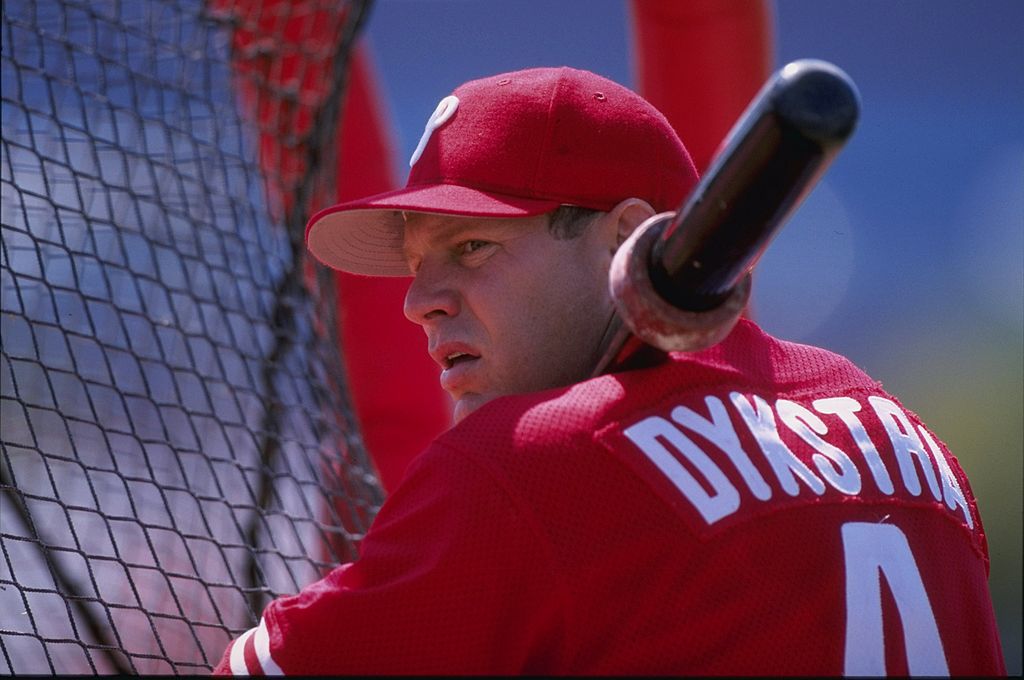
After being traded to the Philadelphia Phillies in 1989, Dykstra experienced a career resurgence. He embodied Philadelphia’s gritty sports culture: unrefined yet relentless. As a leadoff hitter, he became one of baseball’s premier on-base threats, finishing second in the National League MVP voting in 1993 and earning three All-Star selections along the way.
Over his 12 years in Major League Baseball, Dykstra earned approximately $36 million in salary—equivalent to around $65 million today when adjusted for inflation. While this amount offered financial security for most athletes, Dykstra sought to leverage it further.
A Dangerous Mindset
Dykstra’s inability to slow down became problematic. The same drive that propelled him to success in baseball proved detrimental in his post-playing life as he pursued risks in business and investments. In 2007, he was named in the Mitchell Report, which exposed widespread steroid use in baseball, with allegations that he had used performance-enhancing drugs during his career highlighting fears of decline and replacement.
His retirement in the mid-1990s left him wealthy yet untethered. Absent the structures provided by professional baseball, impulse took over.
The Financial Rebirth and Subsequent Collapse
After retiring in 1996, Dykstra refused to fade into obscurity. At just 33, he had substantial earnings and could have opted for a quieter life filled with autograph signings and public appearances. Instead, he pursued entrepreneurship, investing in a series of successful car wash and quick-lube franchises throughout Southern California. These ventures flourished, generating around $1 million annually for Dykstra by their peak in 2007.
After selling his businesses for $51 million, he embraced a lavish lifestyle, moving into an $18 million mansion previously owned by Wayne Gretzky. He upgraded his assets, acquiring luxury vehicles and flying privately—an ostentatious transformation for a former athlete that drew admiration.
However, the financial success did not hold. Dykstra’s desire to live like a billionaire led to excessive spending that outpaced his income. Ventures like “The Players Club,” a magazine aimed at wealthy athletes, faltered, incurring losses that he could not sustain.
By July 2009, just a year after he proclaimed a personal net worth of nearly $60 million, Dykstra filed for Chapter 11 bankruptcy, only to reveal debts of $30 million to $50 million against assets worth less than $50,000. This shocking transformation illustrated not just a financial meltdown, but an unraveling characterized by deception and impulsivity.
As his creditors closed in, the loss of his lavish estate followed a series of poor choices, including the dubious management of his son’s signing bonus. By August 2009, he found himself homeless, and by September, he was selling personal memorabilia to cover expenses—an alarming fall for someone who once seemed invincible.
The Long Aftermath
Even after his release from prison, Dykstra’s life did not stabilize. In 2020, a judge dismissed his defamation lawsuit against former teammate Ron Darling, labeling him legally “libel-proof” due to his tarnished reputation. By February 2024, he suffered a major stroke, which he claims brought him back to life through unexpected support from his fans.
This narrative returns to the traffic stop in 2026, where Dykstra was reportedly boasting about a “streak” of 2,771 days without an arrest—a streak that now faces legal scrutiny. His story transcends mere misfortune; it illustrates a life where relentless ambition turned into a destructive force. Dykstra’s journey encapsulates how the strengths that once defined him ultimately led to his undoing.

Meet William, a proud Bethel University alumnus with a fervent passion for lifestyle and culture topics. His keen interest doesn’t stop there; he’s also deeply engrossed in current events of all kinds. William dedicates himself wholeheartedly to this site, thriving on the collaborative energy he shares with Suzanne, his long-standing partner in crime.
Having navigated their university courses side by side for years, their teamwork on the site is nothing short of dynamic. Together, they bring a unique blend of insights, proving that two heads are indeed better than one in delivering compelling content.