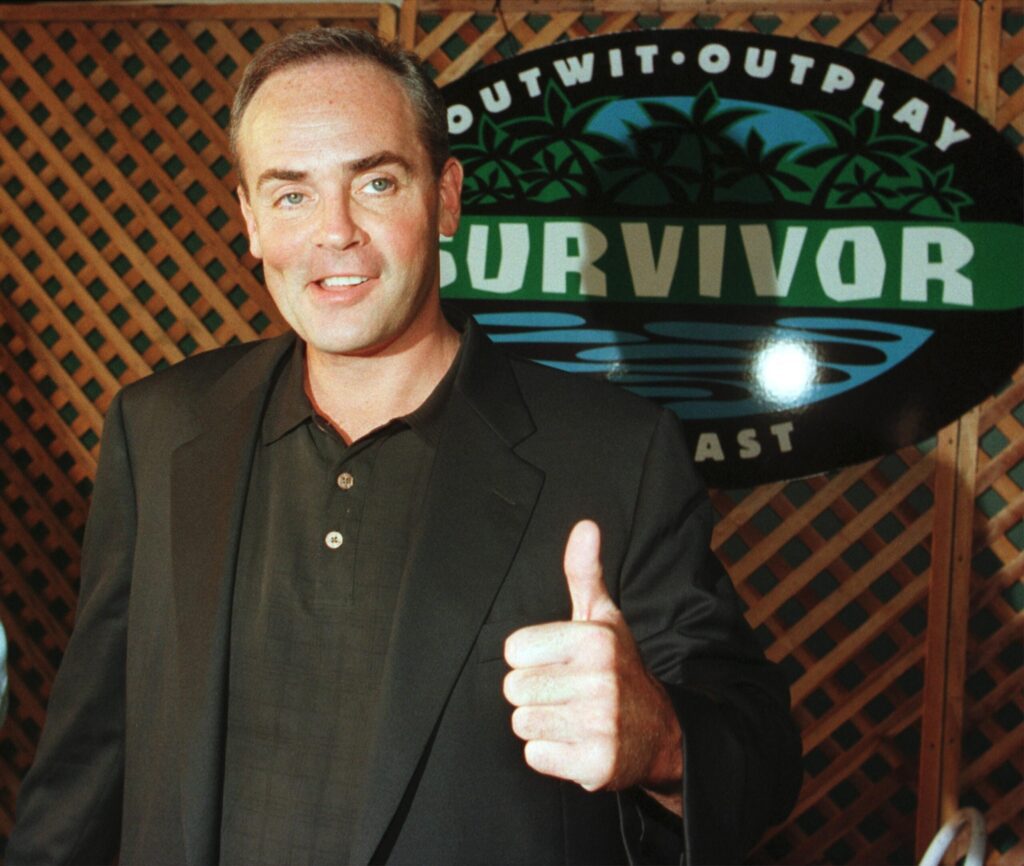
In the summer of 2000, Richard Hatch captured national attention by winning the inaugural season of “Survivor.” Though he became an overnight celebrity and claimed a $1 million prize, his story took a dark turn due to unresolved tax issues. Instead of enjoying wealth and stability, Hatch now faces significant legal and financial repercussions that stem from his failure to pay taxes on his winnings.
The Original Tax Bill
Hatch’s troubles began shortly after “Survivor” wrapped up. Federal authorities allege that he neglected to report and pay taxes on over $1.4 million in income, which included his winnings, a Pontiac Aztek, and additional earnings from media appearances. While it’s common for reality TV winners and entertainers to face substantial tax bills, most fulfill their tax obligations—Hatch did not.
From the government’s viewpoint, the case was straightforward: Hatch earned the money, owed taxes on it, and failed to report it correctly. However, he has spent over two decades claiming that the situation was far more complex.
The Theory That Started It All
Hatch insists that he did not deliberately evade taxes, arguing that the responsibility should not have rested solely on him. He makes two main claims. First, he contends that CBS and “Survivor” creator Mark Burnett should have withheld taxes on his prize before payment—similar to how employers withhold income taxes. Second, he argues that since “Survivor” was filmed in Malaysia, his tax obligations actually lay with the Malaysian government, not the IRS. According to Hatch, U.S. law required the production to handle those tax matters on-site.
Courts have consistently rejected these arguments, ruling that regardless of the filming location or prize distribution, Hatch was personally liable for reporting his income and paying U.S. federal taxes.
From TV Fame to Federal Prison
By 2006, Hatch’s dispute turned criminal. He faced charges of tax evasion and fraud but was ultimately convicted of filing false income tax returns. The jury sentenced him to 51 months in federal prison, along with three years of supervised release. The court also required him to file amended returns for 2000 and 2001 and pay his outstanding tax obligations—a requirement he failed to fully meet, ensuring the issue would not resolve itself.
The Snowball Effect
In 2010, the IRS officially assessed Hatch’s unpaid taxes, penalties, and interest, which began compounding significantly. Interest and penalties accumulated year after year, causing a growing financial burden. While compounding can help investments grow, in Hatch’s case, it transformed an unpaid tax bill into a significant financial liability.
By the mid-2000s, much of his “Survivor” earnings had been depleted, leaving him with increasing debt and fewer resources to resolve it.
The IRS Comes Back for More
In 2022, the federal government intensified efforts to collect Hatch’s debt. Prosecutors sought to convert his outstanding tax assessments into a formal court judgment, which would empower them to pursue collection more aggressively, including attempts to enforce tax liens against properties in Newport, Rhode Island. These properties had previously been transferred to his sister’s name, leading the government to argue that the transfers were a strategy to protect assets from creditors. However, a judge ruled that the government could not establish Hatch retained ownership of the properties, as the transfers were too old to contest under state law.
The Final Judgment
In March 2026, U.S. District Court Chief Judge John McConnell Jr. issued a final ruling requiring Hatch to pay $3,293,471. This judgment encompassed federal income tax liabilities from 2000 and 2001, along with years of accrued penalties and interest. It also permitted the federal government to initiate standard debt enforcement measures against him.
Hatch has appealed the ruling in the U.S. Court of Appeals and, at times, has represented himself in legal proceedings, maintaining a public optimism that his story has not yet been fully understood.

Meet William, a proud Bethel University alumnus with a fervent passion for lifestyle and culture topics. His keen interest doesn’t stop there; he’s also deeply engrossed in current events of all kinds. William dedicates himself wholeheartedly to this site, thriving on the collaborative energy he shares with Suzanne, his long-standing partner in crime.
Having navigated their university courses side by side for years, their teamwork on the site is nothing short of dynamic. Together, they bring a unique blend of insights, proving that two heads are indeed better than one in delivering compelling content.